Europa Clipper Comes Back to Earth for One Last Slingshot Before Jupiter
Two years after leaving Florida, the largest planetary spacecraft NASA has built swings past Earth on December 3. The flyby steals a little of our planet's momentum and aims it at an icy moon that probably hides an ocean.
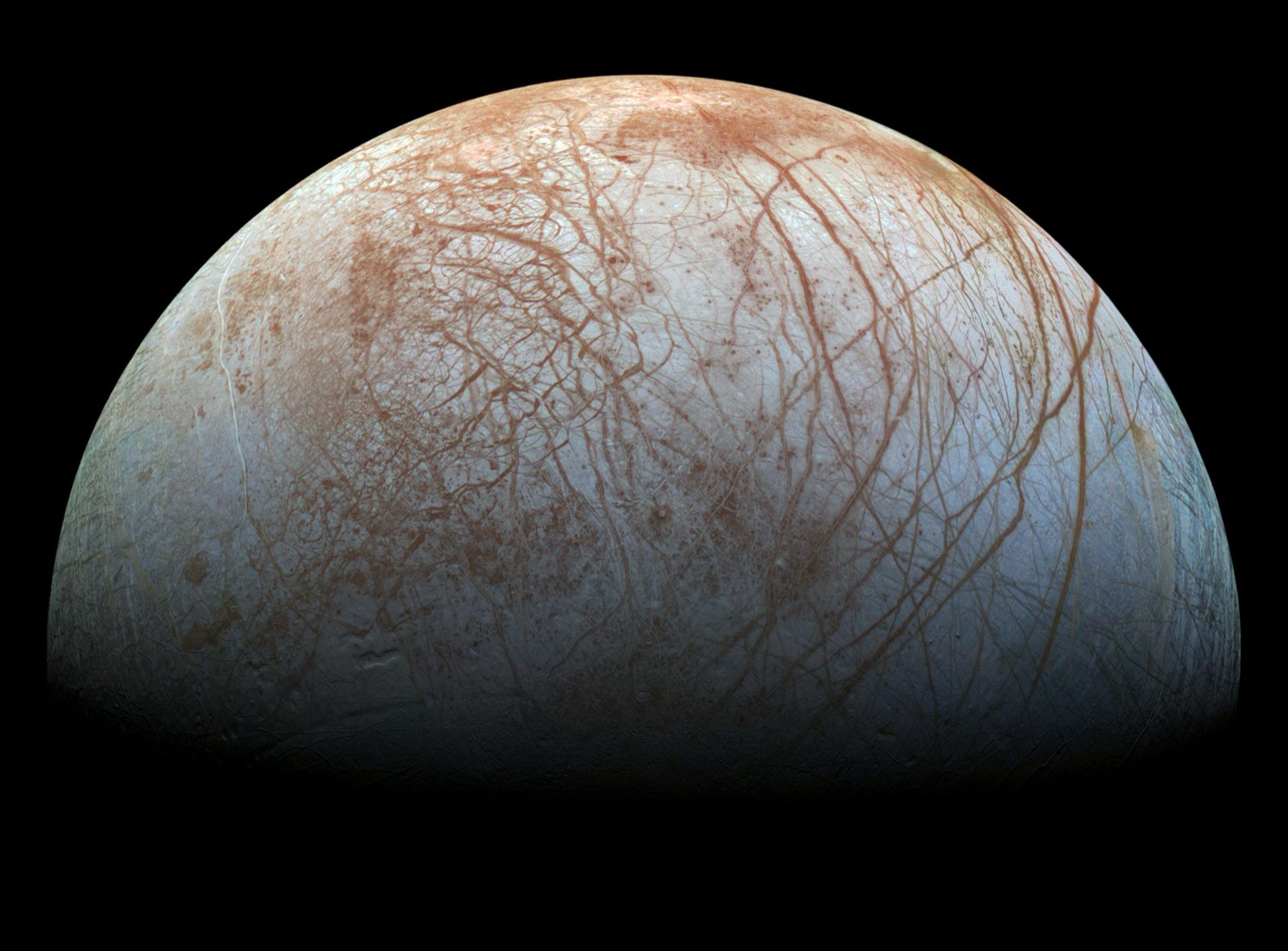
Europa in color, reprocessed from images taken by NASA's Galileo spacecraft in the late 1990s. The reddish lines are cracks and ridges in an ice shell over a suspected ocean.
Image: NASA/JPL-Caltech/SETI Institute (public domain)
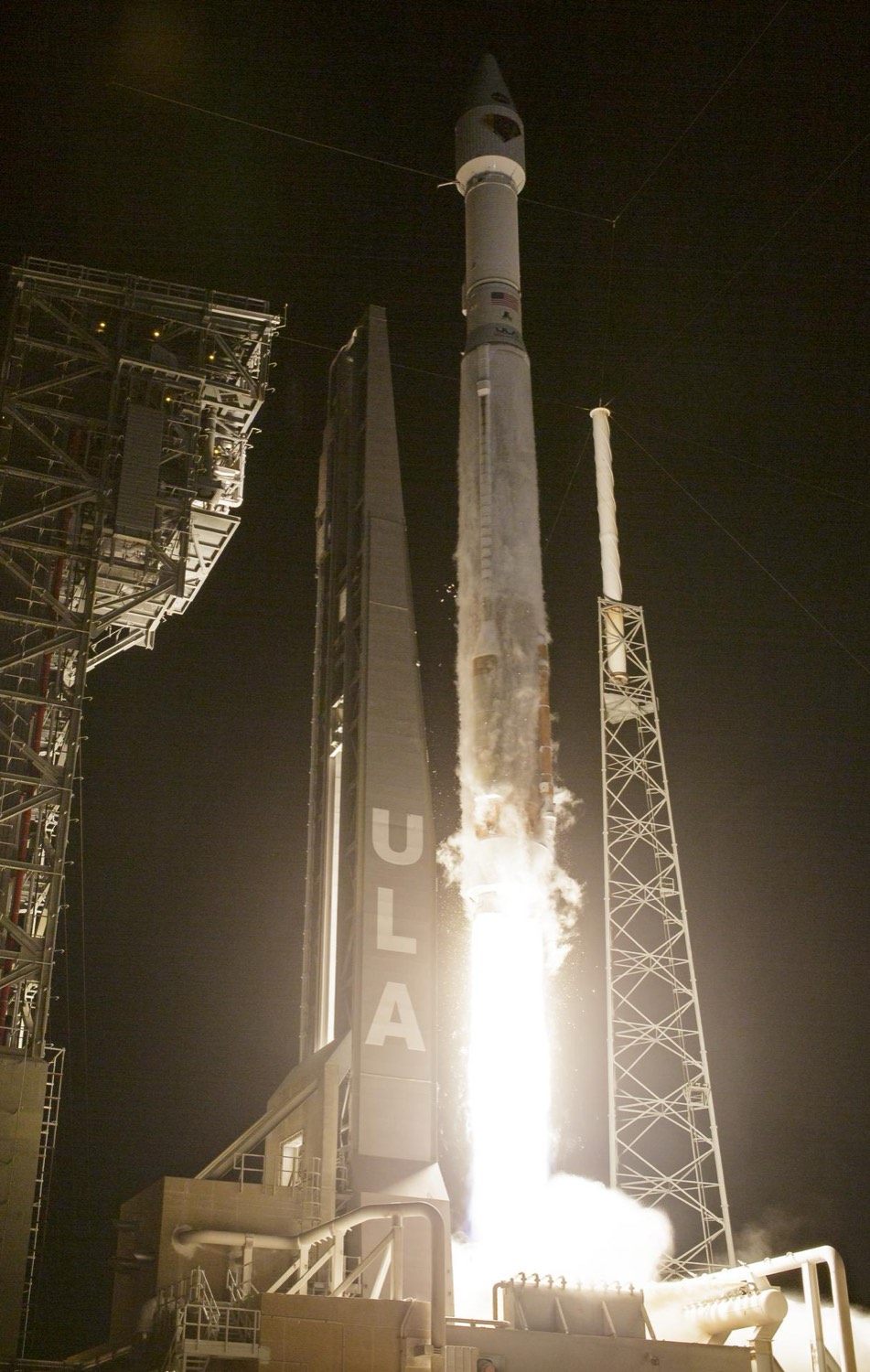
When Europa Clipper lifted off from Kennedy Space Center on October 14, 2024, it didn't head straight for Jupiter. No rocket we have could throw a spacecraft that big all the way there in one go. Instead it set off on a looping path designed to borrow speed from two planets on the way. The first was Mars, in March 2025. The second is the one it left from.
A gravity assist, in plain terms
A gravity assist works a bit like jumping onto a moving merry-go-round and getting flung off faster. As the spacecraft swings close behind a planet moving around the Sun, it picks up some of that planet's orbital momentum. The planet slows down by an amount far too small to ever measure. The spacecraft gains a lot.
On December 3, 2026, Europa Clipper is scheduled to pass Earth at a few thousand kilometers, according to mission planners and published trajectory data. That's close enough to give a big boost and bend its path outward, toward a meeting with Jupiter in April 2030.
Using Earth as a lab
Coming home has a bonus. Europa Clipper's magnetometer, the instrument that will measure magnetic fields at Europa, needs to be calibrated, and Earth's magnetic field is the best-known magnetic field in the solar system. Mission scientists have described this flyby as the one chance to calibrate the magnetometer against a known reference after launch. Other instruments may take test data too.
What's waiting at Jupiter
Europa is a moon a little smaller than our own. Its surface is ice, crisscrossed with long reddish cracks, as in the Galileo image above. Beneath that ice, most scientists think, is a global ocean of salty liquid water, perhaps holding about twice as much water as all of Earth's oceans combined.
Liquid water, plus energy, plus the right chemistry, are the ingredients life needs, at least the kind we know. Europa Clipper isn't a life-detection mission. Its job is to work out whether Europa could support life: how thick the ice is, how salty the ocean is, whether material moves between the two, and whether there are plumes venting water into space.
To do that, it will orbit Jupiter and make 49 close flybys of Europa, some dipping to about 25 kilometers above the surface. Jupiter's radiation is brutal, so the spacecraft dives in, collects data, and loops back out.
To learn whether an ocean half a billion miles away could host life, the spacecraft first has to come back and say hello.
A big machine
Europa Clipper is the largest spacecraft NASA has built for a planetary mission. Its solar arrays stretch about 30 meters from tip to tip, longer than a basketball court, because sunlight at Jupiter is only about a twenty-fifth as strong as it is here.
Can anyone see it go by?
Possibly, with a telescope and good timing, for experienced observers at the right longitudes. Spacecraft passing Earth have been photographed by amateurs before, appearing as faint moving dots. If you want to try, NASA's JPL Horizons service publishes positions for many spacecraft; enter the mission and your location in the days before the flyby. For most people, the better plan is to follow the mission team's updates.
The long wait
After December 3, there's a quiet cruise of more than three years. The spacecraft arrives at Jupiter in April 2030 and starts its Europa flybys after that. It's a long time to wait for one of the biggest questions in science. But it's a little easier to be patient when the spacecraft has dropped by home first, one last time, on its way out.
Sources and further reading
- NASA, Europa Clipper mission overview
- Europa Clipper team abstracts, Europlanet Science Congress 2026
- NASA/JPL Horizons system, spacecraft ephemerides
Calculated times assume the locations named in the story and can shift slightly elsewhere. Found a mistake? Send a correction.